Bedroom to Breakthrough: How Acoustic TikTok Turned Three Chords Into a Career
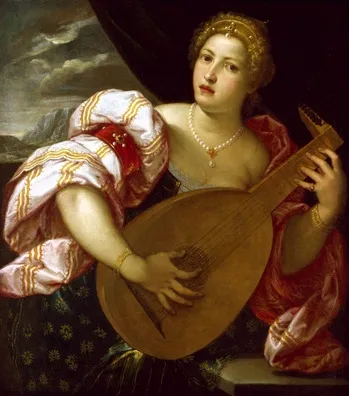
Photo: Parrasio Micheli, Public domain, via Wikimedia Commons
Once upon a time, "going viral" meant a late-night host clip or a forwarded YouTube link that your aunt emailed you with three exclamation points in the subject line. Today, it means a 22-year-old in a Colorado apartment, one acoustic guitar, and a phone propped against a stack of textbooks, racking up four million views before breakfast.
Welcome to the unplugged revolution. No smoke machines required.
The Algorithm Loves a Campfire
Here's something the music industry didn't see coming: TikTok's recommendation engine has a soft spot for authenticity. While major labels were busy debating whether to invest in AI-generated pop, the platform's users were busy rewarding musicians who looked like they'd just rolled out of bed and grabbed the nearest instrument.
Acoustic content — stripped-down covers, spontaneous originals, living-room sessions with a cat occasionally wandering into frame — consistently outperforms heavily produced alternatives on short-form video. And it's not just a vibe thing. There's actual science behind it.
Researchers studying social media engagement have found that what they call "benevolent imperfection" — content that signals genuine effort without artificial polish — triggers stronger parasocial connections between creator and viewer. In plain English: when someone sounds like a real human being playing a real instrument in a real room, audiences trust them more. And trust, on TikTok, converts to follows, streams, and eventually, sold-out shows.
Meet the New Music Economy
Take Marisol Vega, a 24-year-old from Austin, Texas, who started posting acoustic covers of pop and indie songs in 2022 with exactly zero industry connections and a secondhand Yamaha she bought off Facebook Marketplace for $80. Her arrangement of a then-viral pop song — just her voice and that Yamaha — hit 2.3 million views in a week. Within three months, she had a booking agent. Within six, she was headlining small venues across the Southwest.
"I kept waiting for someone to tell me I was doing it wrong," she said in a recent interview. "Like, shouldn't I have a band? Shouldn't there be production value? But the comments were always like, 'don't change anything.' So I didn't."
Vega's story isn't unique — it's practically a template now. The economics of unplugged content creation have fundamentally shifted who gets to participate in the music industry. The startup costs are laughably low: a decent phone, a passable acoustic instrument, and a room with reasonable acoustics (bathrooms, weirdly, are having a moment). No studio time. No session musicians. No mixing engineer charging $200 an hour.
Revenue streams for acoustic TikTok creators have also multiplied in ways that would have seemed absurd five years ago. There's the obvious: TikTok's Creator Fund, which pays per view. But the real money comes from the downstream effects — Spotify streams that spike after a video lands, Patreon memberships from fans who want early access to recordings, licensing deals for the covers themselves, and live show ticket sales from audiences who feel like they already know the performer personally.
Why Covers Work (And Why Labels Are Finally Paying Attention)
Here's the counterintuitive part: the content that's driving most of these careers isn't original music. It's covers. Specifically, acoustic reimaginings of songs people already know and love.
This isn't laziness — it's strategy, even when it doesn't start that way. A familiar melody gives a new listener an immediate emotional handhold. They know the song. They don't know you. But when you strip away the production and play something they've heard a hundred times on just a guitar, you're essentially saying: here's what this song sounds like when it's just a person. And that recontextualization is surprisingly powerful.
Several independent music analysts have noted that acoustic cover videos on TikTok now function similarly to radio play once did — they introduce artists to audiences at scale, without requiring the artist to give up ownership of their work. It's exposure with a business model attached, which is more than radio ever offered.
Labels have noticed. Several major imprints have quietly started scouting TikTok acoustic creators the way they used to scout open mic nights — which is either a sign that the industry is finally catching up, or that it's about to ruin something good, depending on who you ask.
The Audience Isn't Passive Anymore
One of the most fascinating dynamics in acoustic TikTok is the feedback loop between creator and viewer. Unlike a polished music video, which invites passive consumption, a bedroom acoustic session invites participation. Viewers request songs in the comments. They suggest arrangements. They duet with the original video, adding harmonies or percussion or, in several memorable cases, air guitar solos that rack up their own independent view counts.
Yes, air guitar. Even in the most acoustic-forward corners of TikTok, the spirit of the imaginary instrument lives on. There's something deeply human about watching someone play a real guitar so well that it makes you want to pick up a fake one.
The Part Where We Get Slightly Philosophical
What acoustic TikTok has really done — beyond launching careers and disrupting industry economics — is redefine what "legitimate" music performance looks like. For decades, the music industry operated on a gatekeeping model: you weren't a real artist until someone with a checkbook said you were. The unplugged revolution on short-form video has essentially crowdsourced that validation.
Millions of viewers deciding that a person in a bedroom with a guitar deserves to be heard is, arguably, a more democratic form of legitimacy than a label A&R rep deciding the same thing in a conference room.
And for those of us who've always believed that the best music happens when you strip everything back — no backing tracks, no Auto-Tune, no smoke machines, just a person and an instrument and something to say — it turns out the internet agrees.
Three chords and the truth, as they say. Apparently, that's still enough. Maybe more than enough.