Why Your Favorite Arena Act Is Now Playing Your Neighbor's Basement (Sort Of)

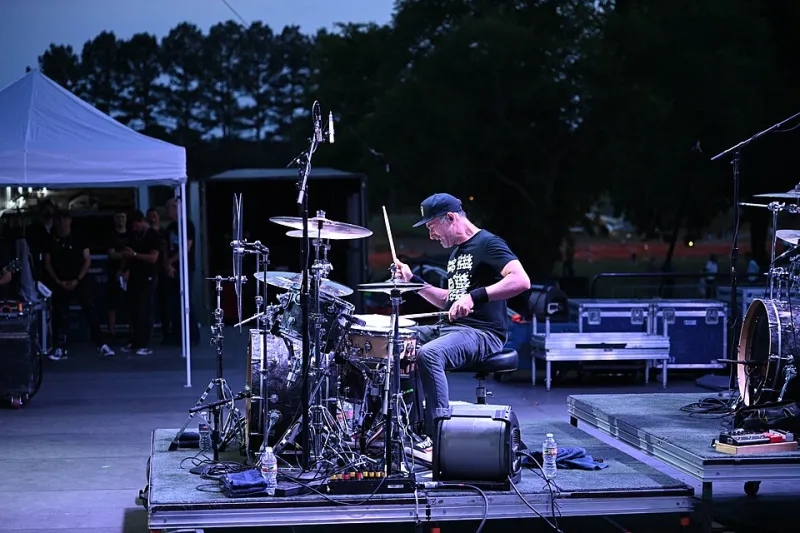
Photo: Notthesameasyouremail (talk) 21:08, 16 February 2009 (UTC), Public domain, via Wikimedia Commons
Picture this: you're crammed into a hockey arena, a beer costs fourteen dollars, and the artist you love is roughly the size of an ant on a stage that could double as a runway. Now picture the same artist, six months later, perched on a stool in a 400-seat theater in Nashville, just a microphone and an acoustic guitar between them and the audience. Which experience do you actually remember the next morning?
That question is apparently keeping a lot of tour managers up at night — because more and more artists are answering it by ditching the production spectacle and going genuinely, defiantly unplugged.
The Great Scale-Down Is Real, and It's Spreading
It started as a whisper. A few rock veterans quietly announced acoustic residencies. A country superstar swapped her arena dates for a run of theater shows. A hip-hop producer turned beat-maker went on a stripped-down spoken-word-and-guitar tour that sold out in minutes. Now, the trend has enough momentum to call itself a movement.
Artists across genres are deliberately choosing smaller rooms. We're talking 200 to 2,000 seats, not 20,000. Venues like the Ryman Auditorium in Nashville, the Troubadour in Los Angeles, and the 9:30 Club in Washington, D.C., are suddenly hosting artists whose usual riders include lighting rigs the size of a small spacecraft.
The reasons vary, but a few themes keep surfacing when you talk to musicians and industry insiders about what's driving the shift.
It's Not Just Nostalgia — It's Survival
There's an economic reality lurking beneath the romanticism. Touring at arena scale is brutally expensive. Production costs, crew sizes, venue fees, insurance — the math is genuinely brutal for artists who aren't moving Taylor Swift-level ticket volume. An acoustic tour, by contrast, travels light. Fewer crew members, smaller vehicles, simpler staging. The profit margin per show can actually be better in a 500-seat room than a 15,000-seat arena, depending on the deal.
But money alone doesn't explain the enthusiasm artists bring to these projects. Talk to anyone who's done an unplugged run recently and you'll hear the same thing: it's fun again.
"You can actually see people's faces," one veteran rock guitarist noted in a recent interview, describing his acoustic residency in Chicago. "In an arena, you're performing for a blur. In a small room, you're performing for humans." That human element — the cough in the third row, the couple in the back sharing a look during a quiet verse — is something no amount of pyrotechnics can manufacture.
What Fans Are Actually Getting Out of This
Let's be honest: the fan experience at a 70,000-person stadium show is often more about proximity to mythology than actual musical connection. You attended. You witnessed. You have the overpriced t-shirt to prove it.
The intimate acoustic experience is categorically different. Audiences at these shows describe something closer to being let in on a secret. Artists talk between songs — really talk, not scripted banter. Arrangements change. Old deep cuts resurface. Sometimes things go slightly sideways and nobody minds, because the whole vibe is human and unguarded in a way that arena production actively works against.
For fans of artists who've built careers on sonic maximalism, hearing those same songs reduced to voice and strings can be genuinely revelatory. A pop anthem that felt like a fun party trick suddenly reveals itself as a beautifully constructed melody. A hip-hop verse delivered over sparse acoustic guitar lands with a weight that a produced beat sometimes obscures.
Genre Doesn't Matter — The Intimacy Translates Everywhere
One of the most surprising aspects of this trend is how genre-agnostic it is. Rock acts going acoustic make intuitive sense — there's a long tradition there, from MTV Unplugged to the folk revival. But the movement has pushed well beyond those comfortable borders.
Country artists, whose genre has always maintained an acoustic DNA even as its production grew increasingly cinematic, have embraced the format enthusiastically. Stripped-down country shows feel like a homecoming — front-porch music returning to the front porch.
More unexpected is the traction in hip-hop. Artists who built followings on bass-heavy production are discovering that their lyricism hits differently when the beat steps aside. Some are collaborating with jazz musicians or acoustic ensembles, creating hybrid performances that feel genuinely new. It's the kind of creative risk that a 90-date arena tour schedule simply doesn't leave room for.
Pop, too, is finding its footing here. Stripped-down pop performances have a way of separating the actual singers from the heavily assisted ones, which has made the format a sort of credibility test — and the artists who pass it earn a different kind of fan loyalty.
The Listening Room Renaissance
All of this is quietly reviving a venue format that many assumed was dying: the listening room. These are spaces — often found in cities like Nashville, Austin, and Asheville — designed specifically for attentive musical engagement. No dance floor. No sports on the bar TVs. Just seats, good acoustics, and the understanding that you're here to listen.
Listening rooms are reporting increased bookings and new interest from artists who would never have considered them five years ago. The format, which has always been beloved by serious music fans, is suddenly attracting a broader audience — including younger listeners who discovered it through social media clips of intimate acoustic performances that went unexpectedly viral.
What This Means for Live Music Going Forward
The stadium experience isn't going anywhere. There will always be a market for spectacle, for the communal electricity of tens of thousands of people sharing a moment. But the acoustic movement suggests that American audiences are hungry for something that the spectacle can't provide: genuine, unmediated musical connection.
If anything, the two formats are becoming complementary rather than competitive. Artists are learning that an intimate acoustic run can deepen the relationship with a fanbase in ways that no amount of confetti cannons can replicate — and that a more connected fanbase is ultimately a more loyal one.
So the next time your favorite arena act announces a small-venue acoustic tour and you feel vaguely confused about whether to be excited or disappointed, trust the instinct that says excited. The volume is going down. The music, somehow, is getting louder.